A Sketchbook Page or Loose Sheets?
Choose a sketchbook page or loose sheets for drawing experiments, then learn how to compare, label and store each format without losing useful context.
Should you use a sketchbook page or loose sheets for drawing experiments? A sketchbook keeps each mark in a bound record; separate paper lets you move, sort and file studies. Choose by asking what you need to do with the work after you draw.
What does each format make easier?
A sketchbook keeps neighbouring experiments together. You can turn back to an earlier mark, add a note beside it and preserve the order in which an idea developed. It suits work you want to revisit as a sequence.
Loose sheets are easier to rearrange. You can place alternatives beside one another, remove a study from a group or scan and file a single page. They suit experiments where sorting and comparing the pages is part of the work.
Neither format is inherently more serious or more finished. If the order matters, a sketchbook is a natural fit; if you need to move studies around, choose loose paper.
How can you compare a sketchbook page or loose sheets?
Keep the drawing conditions similar so your choice reflects the format rather than a change in tools or time. Use the same subject, pencil and session length for each study, and record practical observations rather than judging only by which drawing looks more polished.
- Page access: Check whether the sketchbook stays open where you need it; if it closes or resists, use loose sheets or hold the page open with a clip.
- Sequence: Check whether the order of studies helps you follow an idea; if it does, keep them in the sketchbook, but if you need to change the order, use loose sheets.
- Comparison: Check whether seeing alternatives side by side helps you decide what to try next; if it does, use loose sheets, but if page order is enough, keep the studies bound.
- Context: Check whether notes remain attached to the drawing they explain; if not, add a note beside the sketchbook drawing or label the back of each sheet.
- Handling: Check whether loose pages shift, bend or get separated; if they do, store them in a labelled folder, but if they stay together more readily in a bound book, use the sketchbook.
- Next action: Check which format makes the next experiment obvious; if turning back prompts a useful continuation, stay in the sketchbook, but if rearranging reveals a useful comparison, work on loose paper.
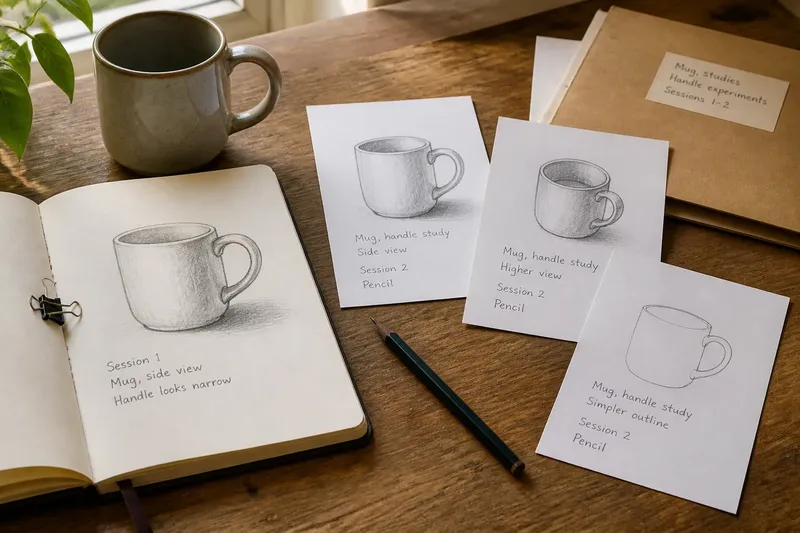
Say you have a mug, a sketchbook, three loose sheets and a pencil, all hypothetical materials for this example. On the first session, draw the mug in the sketchbook and note that its handle looks narrow from the side. On the next session, draw the same view on one sheet, then use the other two sheets for a higher view and a simpler outline. Label each reverse “mug, handle study” with its view, then lay the sheets beside the sketchbook page. If the bound page makes the change of viewpoint easier to follow, keep the next study in the book; if the loose sheets make the three outlines easier to compare, continue on sheets and file them together.
How should you set up a short comparison?
Choose a single subject and keep your tools consistent. For instance, use a mug, a sketchbook, several sheets of similar paper, a pencil, a folder and a soft pencil for labels; the materials are examples, not requirements.
- Draw one study in the sketchbook and note the question you are exploring, such as how the handle meets the body.
- Make a related study on a loose sheet with the same pencil, then label its reverse with the subject and question.
- Return to the sketchbook for another study, changing one feature, such as the viewpoint, while leaving the other materials unchanged.
- Use a separate sheet for an alternative, then place it beside the earlier sheet and book page.
- Record what the format made easier: following the sequence, keeping notes with the drawing, or moving alternatives around.
- Choose the format for your next session based on that observation, and store the work in the book or a labelled folder accordingly.
If a session is missed, continue when you can rather than filling the gap with an invented sequence. Labels and notes preserve the actual order of the work.
How do you keep loose drawings connected to their context?
Write a compact note on the reverse of each sheet: subject, session or date, tool, and the question behind the drawing. “Mug handle, side view, looking for a simpler curve” gives you more to work with later than a label such as “drawing”.
Keep related pages in a labelled folder or envelope. If the drawing might smudge, place clean paper between it and the next sheet; if you carry the folder, a backing board can help prevent bent corners.
For a scan or photograph, include the note in the same digital file or record the filename in an index. In a sketchbook, note the page number or add a tab if you expect to return to a particular study.
What do artists ask about sketchbook pages and loose sheets?
Can I use both in the same drawing practice?
Yes. Use bound pages to preserve a sequence and loose sheets when you want to separate, compare or regroup alternatives. A label can link a loose drawing to the sketchbook without forcing either format to do every job.
Which format suits drawing experiments?
Choose the format that supports your next action. A sketchbook records changes in order; loose sheets make it easier to place alternatives together and rearrange them.
How should I store unfinished drawings on loose paper?
Label each sheet and keep related work in a folder or envelope. If a drawing is delicate or smudged, separate it from other pages with clean paper.
What if my sketchbook page feels too permanent?
Treat the page as a record, not a final verdict. Make a new study on loose paper, then note where it belongs in your book or index.
What should you carry into your next session?
Choose one working rule based on what you noticed: keep first studies in the sketchbook and move to loose sheets when you need to compare alternatives, or begin on sheets and file them once their order becomes clear. Write the rule inside the book cover or on the folder.
When you return to the phrase “sketchbook page or loose sheets”, use the decision that served the last experiment as a starting point, not a permanent rule. The best format is the one that keeps the drawing, its context and your next decision within reach.