The Still Life Before the Photograph
Still life before photography reveals how artists built pictures by hand, using chosen objects to explore domestic life, trade, time and careful observation.
Before a camera could capture a kitchen table, an artist had to select each object, place it, and build its image by hand. Still life before photography was not simply a way to practise drawing: it offered a portable subject through which artists could examine household life, material wealth, trade and time passing.
Why did still life matter before photography?
For centuries, painters and draughtspeople used arrangements of fruit, flowers, vessels, books, food and tools to make pictures without relying on a sitter or a particular landscape. The objects could remain in place while the artist worked, allowing close attention to their shapes, surfaces and changing light.
That practical freedom also shaped the subject’s meaning. A table could hold costly imports, seasonal produce, everyday utensils or signs of a meal interrupted. Artists selected and arranged these things by hand; there was no neutral snapshot. What appeared in the picture, and what remained outside it, reflected deliberate choices.
Photography later offered a different way to record visible scenes, but it did not make still life obsolete. Artists continued to use the form for observation, invention and ideas about material life. The distinction is useful: a still life can resemble a record, yet its arrangement and handling make it an authored picture.
What can a still life tell us about daily life?
Objects can point towards the conditions in which people ate, worked, travelled or displayed possessions. A vessel’s material, a food’s availability, or the presence of imported goods may carry social context, while wear and repair can suggest repeated use. Such clues invite interpretation, but one object rarely tells a complete story on its own.
Still-life pictures also reflect the systems that brought objects together. A table laid with unfamiliar or costly goods may evoke commerce and collecting; domestic utensils can direct attention to work often carried out at home. Read the objects in relation to one another and to the picture’s setting, rather than treating each as a fixed symbol.
How did artists make meaning through materials?
Different surfaces offered different visual challenges and associations. Glass might transmit or distort what lay behind it; metal could catch sharp highlights; fruit and flowers changed as they ripened or wilted. Artists could make these qualities central, or use them to create a mood through colour, texture and light.
Material choices mattered beyond appearance. The polished surface of a vessel might suggest care or display, while a chipped bowl could make handling and age visible. Neither detail has a single required meaning: its effect depends on the surrounding objects, the artist’s treatment and what the viewer notices.
Some still lifes also carry religious, moral or reflective themes. A fading flower, a used candle or food left behind might prompt thoughts about time and transience. These readings are possibilities, not a code to apply automatically; historical context and the whole arrangement matter.
How can you read a still life without guessing?
Begin with what can be seen, then separate observation from interpretation. Note the objects, their materials, signs of use, and how the artist has presented them. Only then consider what those choices might suggest.
- Identify the objects: If you can name them confidently, consider their ordinary use; if not, describe their visible shape and material before assigning a purpose.
- Notice wear: If a surface is chipped, stained or repaired, consider repeated use; if it appears pristine, consider display or careful preservation instead.
- Look for unusual goods: If an object seems costly or unfamiliar, consider trade or collecting; if its origin is unclear, avoid claiming where it came from.
- Check what is absent: If the scene shows a meal but no diners, consider how that absence affects the mood; if the context is uncertain, keep the observation open-ended.
- Compare materials: If glossy and matte surfaces sit together, notice how their contrast directs attention; if the difference is subtle, focus on colour or shape instead.
- Separate fact from reading: If an interpretation rests on a visible detail, state both; if it depends on an assumed symbol, present it as a possibility rather than a fact.
What questions help you interpret a still life?
What is the difference between a still life and a photograph?
A still-life painting or drawing is built through the artist’s choices of object, arrangement and mark. A photograph also involves choices, but records light through a camera rather than reconstructing every visible form by hand.
Why did artists paint food and household objects?
These subjects were available for sustained observation and could address daily life, skill, wealth, trade or the passage of time. Their meaning depends on the particular objects and how the artist presents them.
Do objects in still lifes always have symbolic meanings?
No. An object may be included for its colour, texture, shape or place in the arrangement, even when viewers can also read it symbolically. Treat symbolism as an interpretation supported by context, not an automatic definition.
How can I tell whether a still life reflects its period?
Look for clues in materials, tools, clothing or goods, then compare them with reliable information about the work’s date and context. If those details are unavailable, describe what is visible and avoid presenting a guess as historical fact.
How can you practise historical looking with a still life?
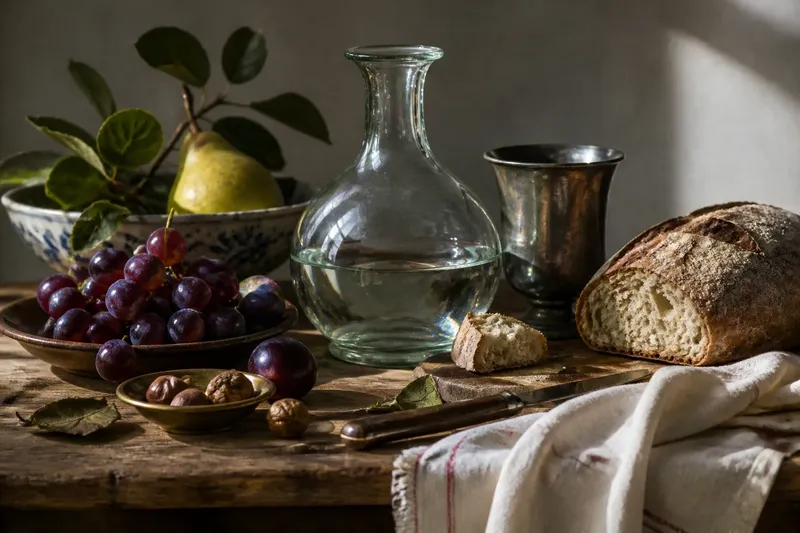
Imagine you are studying a reproduction of a still life showing a glass vessel, a loaf, a metal cup and a folded cloth. First, write down those visible objects without assigning meanings. Next, note that the vessel is transparent, the cup is reflective, and the cloth appears carefully folded. Then separate your reading from your observations: the arrangement may suggest a meal or display, but without further context you cannot conclude who owned the goods or what occasion they marked.
This approach keeps the picture’s history in view without forcing a single explanation. When you encounter still life before photography, ask what the artist could control by selecting and arranging objects, and what the visible materials suggest about their world. The answer often begins with a modest detail—a worn edge, an imported-looking vessel, or an empty place at the table—and grows only as far as the evidence allows.